


.png)
.svg)
At KSS Energia, leading with data was written into the strategy, but data still lived a life of its own. Johanna Lassila, who leads strategic execution at KSS Energia, tells how working with Data Design changed that.


Where did the need for a data strategy and governance model actually start?
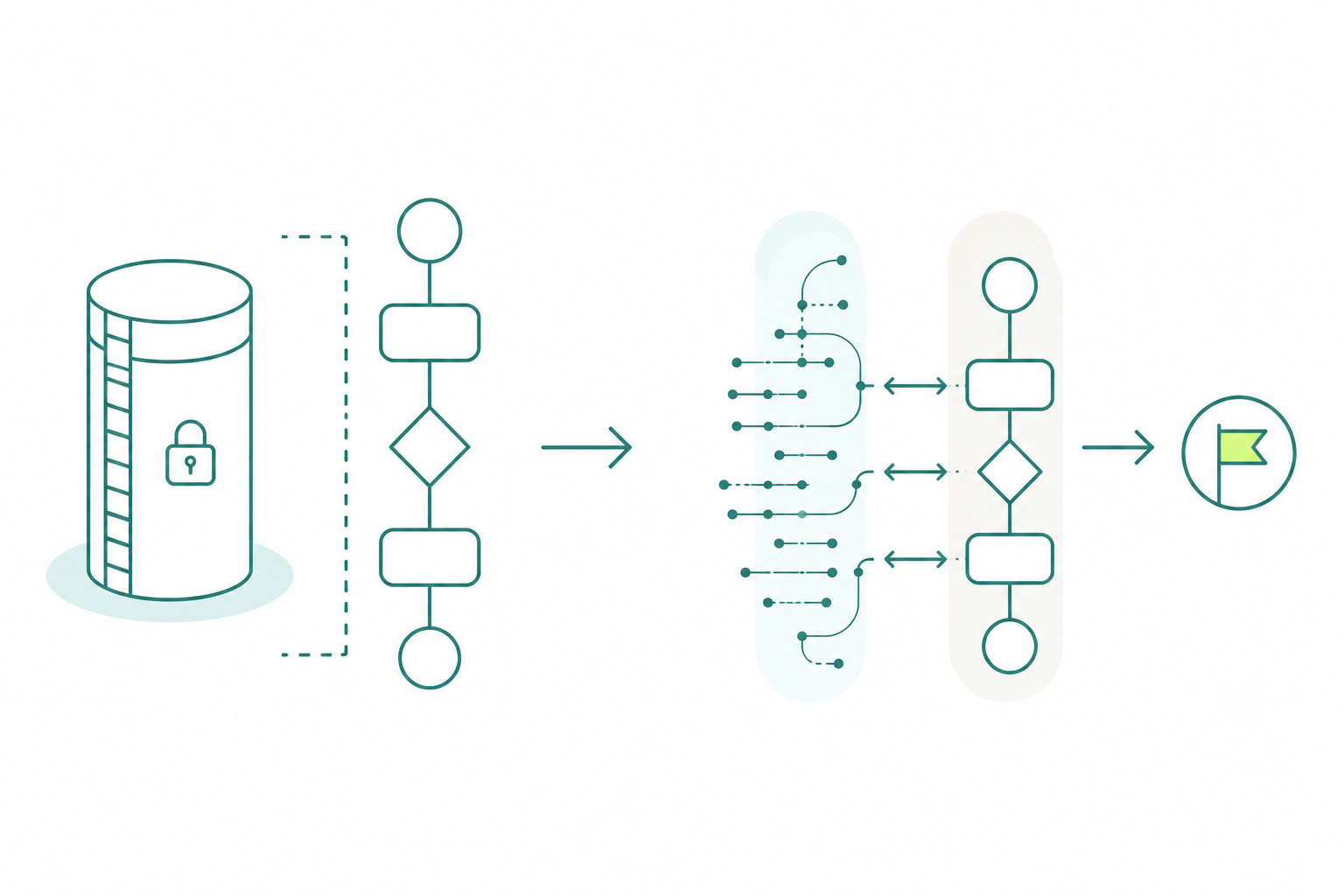
When KSS Energia renewed its business strategy and placed leading with data at its core, it became clear that data and business processes need to move side by side. Johanna Lassila describes the starting point this way:
"Data was a silo of its own. When you look at the strategy and understand what data means in today's work, there was no question that we needed to open this up."
Why was this the right moment to take it on?
This work ran in parallel with the KSS Energia core process project. The renewed strategy created a natural moment to stop and think about how to bring data into it. Lassila sees the timing as close to ideal:
"From the perspective of our core processes, I'd say the timing for [the project] was nearly perfect."
Starting the project just when the strategy was fresh and the organization had a clear direction showed in the outcome. The role of data didn't stay separate, it was built into what the strategy actually means for KSS Energia in practice.
What insights came up during the project?
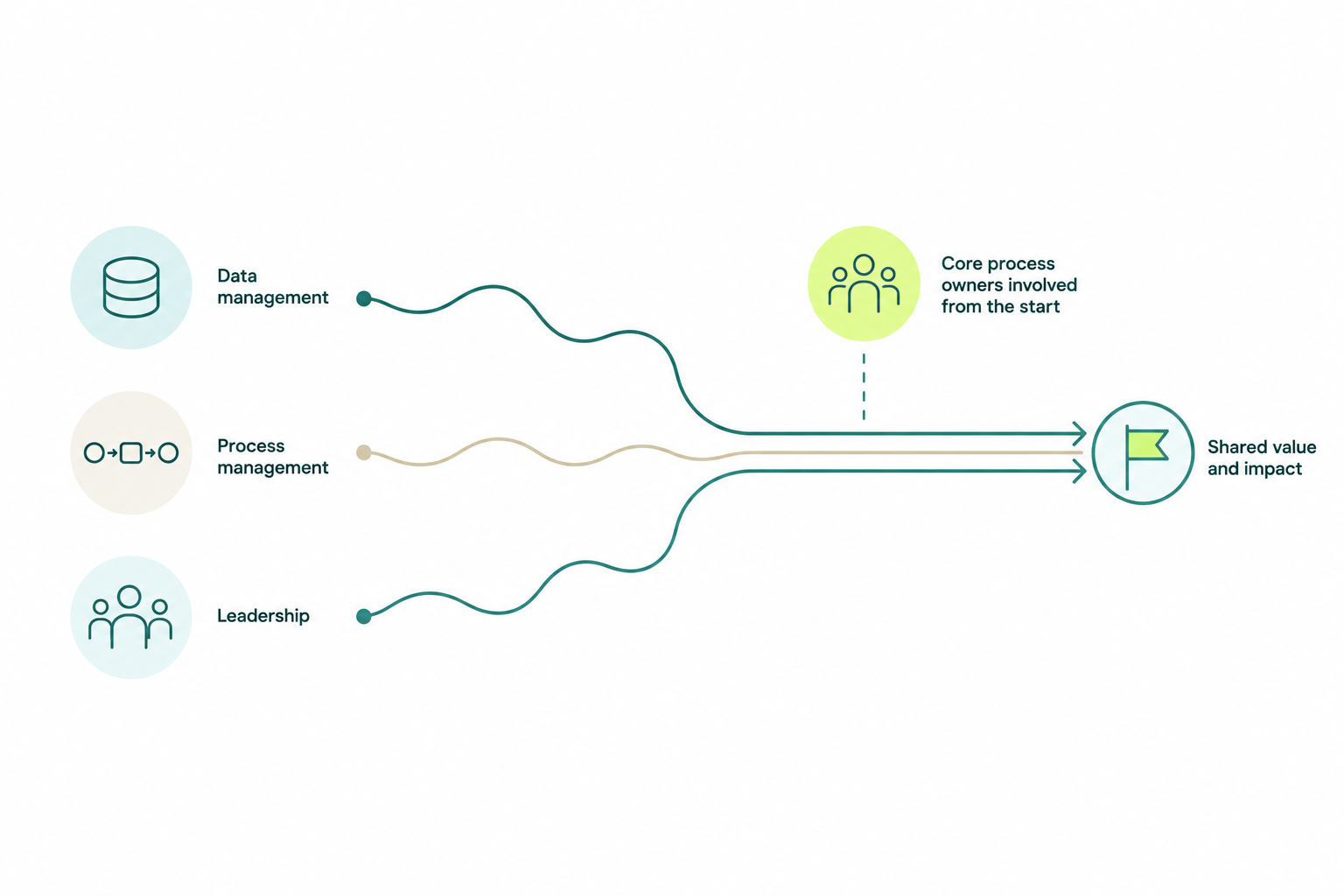
One of the key insights was how data management, process management and leadership belong together and how easily they still drift apart. According to Lassila, they shouldn't be driven as separate things, but side by side and at the same pace. Getting the core process owners involved from the start was important here, because they began to see the value of data concretely through their own work.
The project also opened eyes to what it really takes to put the data foundation in order, which came as a surprise:
"It's easy to say data should be high quality. But what that means concretely, anjd how you make it part of how the organization works, that's a different matter."
Lassila compares building the data foundation to putting the whole company's foundation in order. At KSS Energia, the first strategy year was specifically about building the foundation, and the same logic applies to data:
"We have an enabling Digital function that's one of our cornerstones. If that cornerstone can't keep up, it shows everywhere."
What concretely changed as a result of the project?
Before the project, KSS Energia didn't have clear use cases for how data brings added value to the strategy. Now they do, and they've been prioritized based on the strategic breakthroughs. Lassila considers this a significant step.
Leadership's understanding of what data means also grew.
"The presentations during the project were so concrete and well crystallized that everyone surely understands the possibilities and meaning of data as part of executing the strategy. But that takes work it doesn't happen on its own."
What was the collaboration with Data Design like?
Lassila describes the collaboration as constructive and forward-moving. She particularly valued the fact that the partner brought both expertise and perspective, and that things could be discussed openly:
"You have excellent expertise and perspective, and the collaboration was, in my view, constructive and forward-moving. It's easy for goal-oriented people to talk to each other."
What's next for KSS Energia?
Next, the data use cases will be prioritized and brought into the rhythm of strategy work. The data governance model is also being built as part of the whole. Lassila wants to make sure the momentum the project created doesn't fade, and believes that this time the work won't end up shelved:
"This is now tied so closely to our strategic management that it won't end up as shelf-ware."
What kinds of organizations is a project like this right for?
According to Lassila, the best moment for a project like this is when the organization has just gone through, or is going through, a big change: like a new strategy or renewed processes:
"It's a good moment to pause and look at how data connects to strategy and how to bring it along. That way, the new course extends into data work too."



.svg)


.png)
.png)


.svg)